January 30th 2025 | Kiran Sabharwal
Edited by Jacqueline Rosenkranz
A slew of data privacy lawsuits have surfaced in the last decade, accompanied with huge fines for privacy breaches by corporate companies such as TikTok, Facebook, and Uber [1]. It is well understood that citizens may not be safe from personal information abuse and leaks by social media companies in the 20th century, but the application of new technologies for the criminal justice system is less clear. In an era of emerging technology, AI, and seemingly constant surveillance, the rights of defendants in the criminal justice system are under attack. Government entities have begun to use these technology tools to infringe on the rights of citizens, creating a reality where we may be under constant supervision.
- A HISTORY OF THE FOURTH AMENDMENT AND TECHNOLOGY
The Fourth Amendment was created to protect citizens from aggressive action and overreach by the government. It was written in the wake of the American Revolution and the practice of British general warrants, which granted virtually unchecked ability to search any effects of an individual in the American colonies without specific reason or probable cause [2]. The Amendment sought to protect the principle that “a man’s house is his castle” via limited government, establishing:
The right of the people to be secure in their persons, houses, papers, and effects, against unreasonable searches and seizures, shall not be violated, and no Warrants shall issue, but upon probable cause, supported by Oath or affirmation, and particularly describing the place to be searched, and the persons or things to be seized.
But the meaning of “effects” as was written into law in 1789 had a very different meaning then than it does now. Protected personal items may be physical or intangible, conventional or digital, and may not even be in the possession of the defendant themselves, as is the case with certain data. Involuntary surrender of these materials without a warrant is unconstitutional, as it defies the principle that individuals are protected from unreasonable searches and seizures.
The connection between the Fourth Amendment as the Framers originally wrote it and its internet-conscious interpretation today occurred over the span of the 20th and 21st centuries, beginning with a case where police wiretapped a public phone booth in the 1970s. This case broadened the exclusionary rule to protect people, not places, and signified that the barrier between the government and protected information extends beyond physical entrance into the walls of one’s home [3]. In this case, the reasonable expectation of privacy was also established for individuals under the eye of the government, limiting its investigatory powers. As the individual in the phone booth, although he was outside of his home, would reasonably assume he was not being surveilled by the government, the evidence was unconstitutionally gathered and thus had to be excluded in court. Another pillar of Fourth Amendment decision making, the third-party doctrine, came from cases in the 1970s [4] [5], which established that “individuals have no legitimate expectation of privacy in information that they voluntarily share with third parties, regardless of whether they intended for the government to have access to the data” [6].
Later decisions applied the principles of reasonable expectation, third-party doctrine, and more flexible definitions of personal effects to the internet age. The Court determined that the warrantless use of a beeper to track movements of an individual in private spaces was not constitutional [7]. The nine justices denied warrantless use of aerial helicopter observation to skirt privacy fences [8], thermal imagers (as they replaced the need for an unconstitutional physical trespass [9]), and access to cell phone data [10]. In United States v. Jones, where a GPS tracking system was installed on the defendant’s car while it was parked in his driveway, the Court determined that this represented a breach of Fourth Amendment rights. And notably, in her concurring opinion on Jones, Justice Sotomayor critiqued third-party doctrine, or the ideal that the information that individuals voluntarily cede to outside companies is fair game to the government. She reasoned that third-party doctrine “is ill suited to the digital age, in which people reveal a great deal of information about themselves to third parties in the course of carrying out mundane tasks” [11]. The Sixth Circuit Court reined in third-party doctrine in Carpenter v. United States, wherein it was decided that warrantless seizure of extensive cell phone location information violates the right to privacy [12].
The principle of an ever-encroaching digital field remains true today. The renaissance of technology has mass benefits, but it also equips a greater breach of privacy than ever before, particularly on Fourth Amendment Rights. Six years after Carpenter v. United States, the issue of the bounds of digital privacy, and the abilities of governments to use digital surveillance tools, remains largely unsettled.
- PROCEDURAL PRIVACY AND CAMERA SURVEILLANCE
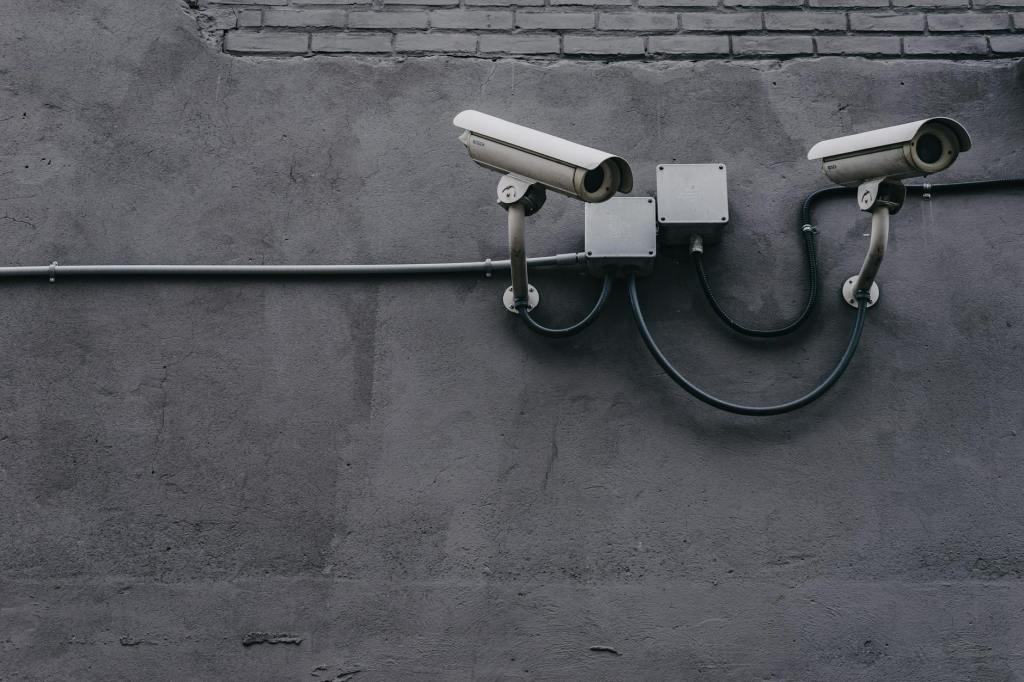
Fourth Amendment case law has struggled to provide protections for what the Harvard Law Review calls “new threats” [13]. One such emerging technology with the potential to upend privacy protections is the utility pole camera. These mounted surveillance cameras survey the outside of an individual’s home 24/7, and feature a moveable view and rewatchable footage. These factors presented an issue that came to federal judicial attention in United States v. Moore-Bush [14]. Ms. Moore, over the course of eight months, was covertly surveilled by the government, who had the ability to “watch the camera’s feed in real time, and remotely pan, tilt, and zoom close enough to read license plates and see faces” and had access to a “digitized record of this footage at their convenience” [15]. Accordingly, police had complete access to information about the households’ activities, mail deliveries, and visitors for eight months. Judge Barron of the First Circuit Court of Appeals called this invasion of privacy unconstitutional, citing the Mosaic Doctrine, which states that while an individual activity may not infringe on privacy rights, some actions taken in aggregate can represent infringements. Thus, while using camera footage without a warrant may not be constitutional, the full picture of constant surveillance outside of an individual’s home– where he or she would have a reasonable expectation of privacy in a way that no “casual observer could”– is not constitutional [14].
Writers for the Harvard Law Review, however, note that the choice to cite Mosaic Doctrine limits the applicability of this decision as precedent. In centering on the aggregated length of the infringement, the First Circuit missed an opportunity to make a statement on the unique and emerging capabilities of technology to go far beyond what an ordinary police officer could detail about Moore’s home. With nearly unlimited data storage, 24/7 coverage, and focusing and zoom capabilities, the utility pole camera is too powerful to leave unregulated [14].
Without a clear decision in United States v. Moore-Bush, the issue has surfaced again in a current case in Kansas [15]. Federal agents placed a utility pole camera outside a defendant’s house for ten weeks without a warrant. This camera held the same storage capacity and zoom abilities, and agents could read license plates and inspect incoming packages to the home. Although the District Court of Kansas conditioned that their standing precedent may be outdated, they held that this did not qualify as an unreasonable search. On appeal, the ACLU noted that such surveillance is still “just as sensitive as the historical cell site location information at issue in Carpenter…[and]… can disclose the identities of a person’s guests and visitors; whether someone other than their spouse visits at night (and how frequently); whether they regularly leave home with a protest sign or a prayer shawl; and, depending on the camera’s zoom capabilities, potentially whether they are holding documents such as medical bills or ballots” [17].
Utility-pole camera footage represents a new avenue for possible privacy rights infringements by the government, but no clear precedent or ruling has been made. Strong judicial precedent or legislative action is necessary to check the government’s investigatory powers via utility pole cameras.
- EMERGING TECHNOLOGIES
Beyond camera surveillance, a plethora of new technologies with the potential to destroy privacy rights are emerging. Smart home devices like Alexa are being used for evidence, which prompts one to question whether private conversations within a home can be considered voluntarily shared information simply because they occurred in proximity to an individual’s speaker [18]. Geofence warrants, as were apparent in People v. Meza, give the government access to all the individuals present in an area by accessing the location data from their cell phones, despite the fact that law enforcement could never possibly have probable cause for an entire population [19]. This access to data “without targeting a specific subject” breaks the Fourth Amendment’s requirement that searches should specifically describe the “persons or things to be seized” [20]. Furthermore, Face ID technology has been misused to identify defendants. As these technologies carry gross inaccuracies, they have led to wrongful arrests of innocent individuals, and disproportionately higher levels of error with people of color [21].
The Fourth Amendment was created to protect individuals when they are most vulnerable to government overreach, and when they are subject to an investigation or police action by the government. While this statute was easily applied in the pre-digital age, the line between admissible evidence and infringement becomes increasingly blurrier. Precedent in defense of rights struggles to keep up with the frontier of investigatory technology, which has created a dystopian arena in which constant surveillance without probable cause seems constitutional. While the Carpenter decision was a step in the right direction, further judicial attention to a more internet-conscious Fourth Amendment is necessary to maintain a free society.
Sources:
[1] Hill, Michael. “The Biggest Data Breach Fines, Penalties, and Settlements so Far.” CSO Online, 18 Sept. 2023, http://www.csoonline.com/article/567531/the-biggest-data-breach-fines-penalties-and-settlements-so-far.html.
[2] “Historical Background on Fourth Amendment.” Constitution Annotated. Accessed March 25, 2024.
[3] Katz v. United States, 389 U.S. 347 (1967)
[4] United States v. Miller, 425 U.S. 435(1976)
[5] Smith v. Maryland, 442 U.S. 735 (1979)
[6] Hecht-Felella, Laura. “The Fourth Amendment in the Digital Age.” Brennan Center for Justice, March 18, 2021. https://www.brennancenter.org/our-work/policy-solutions/fourth-amendment-digital-age.
[7] United States v. Karo, 468 U.S. 705, 716 (1984).
[8] Florida v. Riley, 488 U.S. 445 (1989)
[9] Kyllo v. United States, 533 U.S. 27 (2001)
[10] Riley v. California, 573 U.S. 373 (2014)
[11] United States v. Jones, 565 U.S. 400 (2012)
[12] Carpenter v. United States, 585 U.S. (2018)
[13] United States v. Moore-Bush, 136 HARV. L. REV 1268, (2023).
[14] 36 F.4th 320 (1st Cir. 2022) (en banc) (per curiam)
[15] “Moore v. United States.” American Civil Liberties Union, September 13, 2023. https://www.aclu.org/cases/moore-v-united-states.
[16] United States v. Hay, No. 22-3276 (10th Cir. 2024)
[17] “United States v. Hay.” American Civil Liberties Union, September 29, 2023. https://www.aclu.org/cases/united-states-v-hay.
[18] Manning, Grace, “Alexa: Can You Keep a Secret? The Third-Party Doctrine in the Age of the Smart Home.” American Criminal Law Review 56, no. 0 (2019), accessed March 25, 2024. https://www.law.georgetown.edu/american-criminal-law-review/aclr-online/volume-56/alexa-can-you-keep-a-secret-the-third-party-doctrine-in-the-age-of-the-smart-home/.
[19] People v. Meza, 90 Cal.App.5th 520 (Cal. Ct. App. 2023)
[20] Kaur Bal, Navdeep. “The Constitutionality of Geofence Warrants.” Berkeley Journal of Criminal Law, January 18, 2024. https://www.bjcl.org/blog/the-constitutionality-of-geofence-warrants.
[21] “Parks v. McCormac.” American Civil Liberties Union, January 29, 2024. https://www.aclu.org/cases/parks-v-mccormac.




 JHULR
JHULR 
Leave a comment